Design
Design Versus Engineering: Are You Sure You Know The Difference?

The industry of product development and manufacturing can be extremely complicated even for the most seasoned of warriors. If you're new to the industry, it can be especially challenging to understand what people are actually talking about. The most common confusion is the difference between Design & Engineering.
“Design” and “Engineering” are at times mistakenly used interchangeably. However, Design is not Engineering and Engineering is not Design. If you are starting the developing process for a product, this slight change in terminology could cost you thousands of dollars in the long run. So, before we get into how that can happen, let's take a look at the differences between the two, so you don’t make that mistake!
Design
Here are the definitions of design:
- A plan or drawing produced to show the look and function or workings of an object before it is built or made.
- An arrangement of lines or shapes created to form a pattern or decoration.
The keywords in these definitions are “drawings,” “plan," “lines," and “shapes." An Industrial designer’s role is to focus on the UX (user experience), aesthetics, textures, and ergonomics of a product. Industrial Designers mostly spend their time planning and iterating on these key aspects of a product by creating 2D sketches.
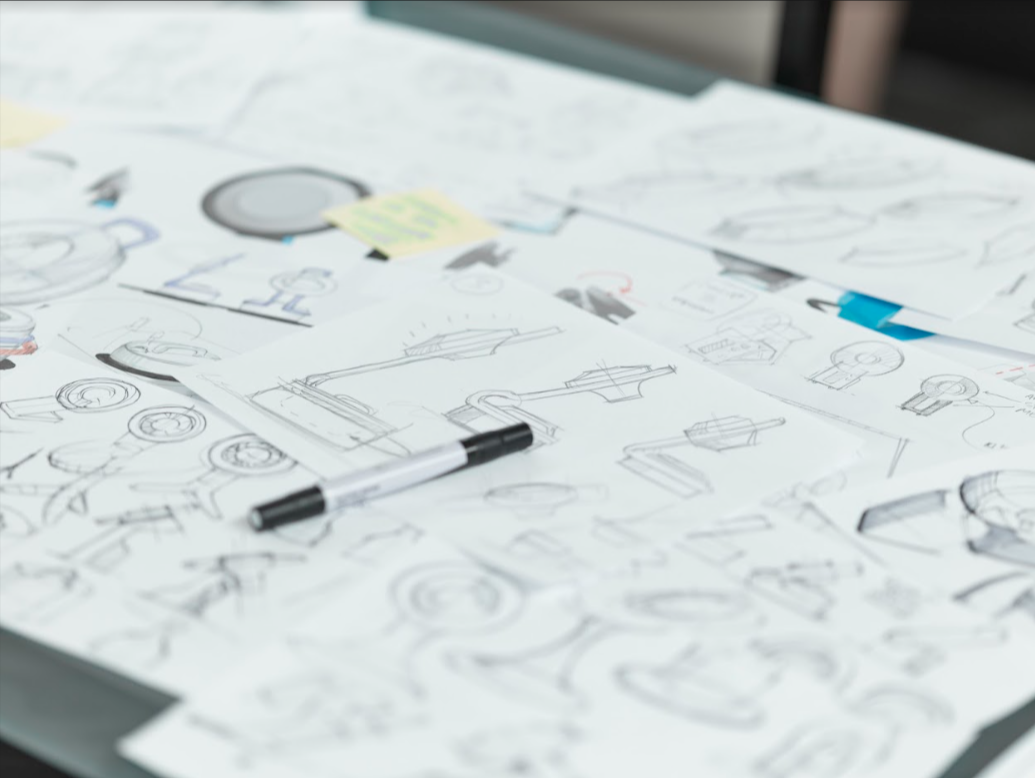
The reason for this is that it allows the designer to create, filter out, and conceptualize multiple ideas, features, and problems, in a short period of time. An Industrial Designer's work and involvement heavily occur in the beginning stages of product development for this very reason! This beginning process of product development is crucial because it allows you to evaluate multiple options/solutions at once and then hone in on what key features are truly important. A designer's mind is full of creativity and works much differently from that of a Mechanical Engineer.
Engineering
Here is the definition of Mechanical Engineering: The branch of engineering dealing with the design, construction, and use of machines.
The keywords here are “Construction” and “Machines.'' Once a design has been chosen and finalized by an Industrial Designer, it then gets passed on to a Mechanical Engineer, who will take the 2D product design and turn it into a functional 3D model. This model will eventually be used to create prototypes, tooling/molds, mass-production machinery, and the final products you see for sale today. Creating just one functional 3D model or CAD (computer-aided design) can take hours upon hours of time to build and is not the time for major exploration or iterating.
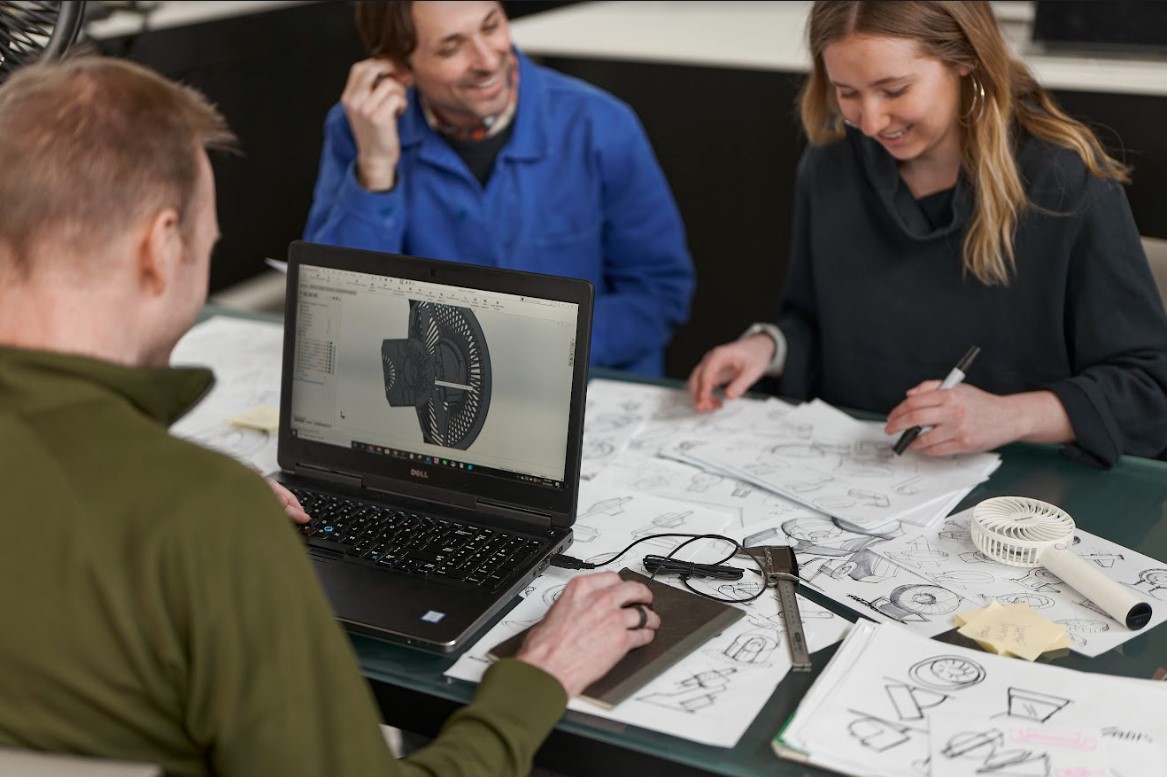
An Engineer works through the manufacture and functional aspects of a product. They produce functional prototypes that follow the guidelines from the original 2D concepts created by a designer. When creating these functional 3D models, the engineer will make sure that every aspect of the product is in line with the processes of machining and mass production in both small and large-scale batches. The simplest mistake of making a plastic part too thick or too thin can result in product failure and thousands of dollars lost to re-make a production tool/mold and re-work the 3D engineering model.
Why You Need To Know The Difference Between Design and Engineering
As I mentioned before, the mind of a designer is very different from that of an engineer. Let an Industrial Designer engineer your product, and you may get something that looks beautiful, but it will end up not being functional or feasible to mass produce. If you let a Mechanical Engineer design your product, you will end up with something that functionally works, but looks ugly and is not user-friendly. It’s very difficult to find one person that has both mindsets and experiences in both fields. If it was common for one person to do both roles, then there wouldn’t be two job titles, two different degrees, and specialized training for both.
Here is a list of problems that can arise if you use one person to do the job of two people:
- Wasted hours and dollars iterating in circles
- Inaccurate development pricing and budgeting
- Improper deliverables for said “Designer or Engineer”
- A product that is not user-friendly
- An ugly product that does not have good visual appeal online or in retail
- A product idea that doesn't work with manufacturing methods and machinery (back to the drawing board)
- An expensive product to manufacture due to inefficient construction or layout
- Re-purchasing Mass Production Tooling and Machinery
- Mass product failures once it hits the market and into the consumer’s hands
- Potential lawsuits resulting from product failures and bodily harm
If you are looking to develop and mass produce a new and innovative product, make sure to not let these two associated words set you off on the wrong track. Many designers will claim they can get you a 3D model but mostly what they will provide are 3D image renderings that can be used for sales decks but not for mass production. Likewise, some engineers will claim they can design the product, but will not look at the user experience or integrate consumer product aesthetics and demographic research.
Don’t make the mistake that others have made in the past! If you are looking for more information on Product Development or Manufacturing, check out our website and portfolio!

About the contributor
Hunter FinlayHunter Finlay has been a part of the Product Development and Manufacturing industry for over 5 years and is the Director of Sales and Client Onboarding for Klugonyx. Klugonyx is a full-service Product Development and Manufacturing firm that has been developing products for consumer use since 2012. He has spoken to thousands of Entrepreneurs, Successful Business Owners, and Inventors regarding their brands, products, and inventions. He has helped existing brands and first-time entrepreneurs take over 400 products to market in almost any industry imaginable. Product Development is the world he lives in and what he loves.
More from Innovate This

Product Development And Manufacturing Terminology-Part 2
When you’re ready to introduce your next big idea to the world, it’s time to start working with the experts for new product development and manufacturing. Navigating the terminology used in these industries can be challenging for new clients! It’s important to be able to convey your needs and understand...

Product Development And Manufacturing Terminology-Part 1
Does your NPI require an RFQ, but you already signed a SOW on top of your shipping is LCL and DDU to the point where your head is spinning? Acronyms can be helpful – especially in business – but only if you know what they mean! Product development acronyms can...
