Licensing
Get Paid For Your Invention Ideas: Strategies for Success

You've got this great idea and you're pitching it to companies. But sooner or later, they're going to start asking questions. These questions really mean, "Why should we pay you?" In this post, I'll show you how to answer those questions the right way so you get paid for your invention ideas. Let's dive in.
Get Paid for Your Invention Ideas by Doing This
Be Ready for Questions About Your Invention
Alright, listen up. Sooner or later, if you've got some clever ideas and you're trying to sell them to a company, maybe to get some cash or maybe just to get some help, folks are going to have some questions for you. And you better be ready to answer them. So, what kind of questions will they ask? Well, once they see how awesome your idea is, they wanna know about your "intellectual property." They'll ask, "What do you own?"
They'll also ask about prior art and patents. They might say, "What about ideas that are already out there? Why should we pay you if your idea is similar to what's already available?" Essentially, they're asking, "Why should we pay you?" So, be ready with your answers.
Show Your Intellectual Property

When they ask, "Can you show us your intellectual property?" what they're really saying is, "Do you actually own something valuable?" So, you might show them your provisional patent application or even a patent you've been granted. But what they're really interested in is whether you truly possess something worth paying for.
Now, it's natural to feel nervous when faced with this question. But I see it as an opportunity. First off, you need to understand what makes your idea different. It's simple, really. You need to identify what sets your invention apart from what's already out there. You also need to know how it differs from existing patents.
Remember, to get paid for your invention ideas, it's crucial to clearly establish and highlight your ownership. So, be ready to confidently showcase what makes your invention special.
Confidently Explain Your Invention

The questions companies ask you are fantastic because they give you a chance to showcase your invention. When they ask about similar ideas or prior art, it's your moment to shine. You get to explain why your idea is special, and why it's worth their attention. Don't be afraid of these questions; they're your chance to impress. When they ask why they should pay you, it's your cue to show them why.
So, when they bring up all the other ideas out there, don't panic. Instead, focus on what makes yours different. They might not say it directly, but they're wondering, "Why should we invest in you?" And that's where you step in.
Sure, there are other ideas floating around, but yours isn't one of them. It's fresh, it's new, and that's why they're interested. Your invention stands out from the crowd, and that's what matters. So, when they ask, be ready to explain why your idea is worth their investment. It's a simple argument.
So, let me give you an example. Mr. Key, we checked out your provisional patent application. It looks really good, by the way. But we did notice something: there's quite a bit of similar stuff out there. Can you tell us about your invention? Sure thing. Thanks for asking. Yes, there are similar things out there, but my invention isn't actually on the market yet. And that's why I focused on the unique aspects when I filed for my intellectual property. Simple as that.
It's all about confidence. Now, here's the kicker, at the end of it all. Because of those unique points compared to similar ideas already out there or patents that have been granted, I'm pretty sure we'll get our patent approved. This is a smooth way to explain why your product stands out from the crowd when they question you about it. It gives you the chance to highlight those differences compared to similar ideas and patents.
So, now it's not just an explanation, it's a sales pitch. Confidence is key. You acknowledge there's prior art, but you also confidently express your belief that your patent will come through. And you know what happens next? In the conversation, they move on to other questions. You've given the right answers. They feel confident to continue working with you. Because you've filed a provisional patent application, in most cases, there's no dispute. So, they don't exactly know what you've safeguarded.
Now, let's say you've already filed a patent and they're raising doubts about it. Here's what you do: mention you're working on more intellectual property filings. They might ask what exactly you're focusing on. You can respond by explaining that you're focusing on various aspects. You're filing for the most efficient manufacturing methods, exploring different approaches and adaptations, and not just protecting the invention itself, but also its innovative aspects.
Final Words
So, when those kinds of questions come up, most of us tend to get a bit nervous. But if you follow the steps I've just outlined and if you've done your homework by researching prior patents, similar products on the market, and the workarounds and variations you've filed on, and you know the most efficient way to manufacture your invention, there's nothing they can ask you that you can't answer with confidence. So, prepare well, and get paid for your invention ideas.

About the contributor
Stephen KeyStephen Key is an award-winning inventor, renowned intellectual property strategist, lifelong entrepreneur, author, speaker, and columnist. Stephen has over 20 patents in his name and the dozens of concepts he has brought to market have retailed in Walmart, 7-Eleven, and Disney stores and parks worldwide and been endorsed by Michael Jordan, Alex Trebek, and Taylor Swift. He has defended his patents in federal court against the largest toy company in the world, Lego’s. In 1999, he cofounded inventRight to teach others his unique process for harnessing the power of open innovation and the licensing business model. His bestselling book about how to license an idea, One Simple Idea by McGraw-Hill, has been translated into six languages. He has written more than 1,000 articles about intellectual property strategy, product licensing, and entrepreneurship for publications online including Forbes, Inc., and Entrepreneur. Universities and governmental organizations around the world regularly invite him to teach them inventRight’s unique processes for commercializing new product ideas. Stephen has won over 20 industry awards, including two Edison Awards and the Most Influential and Inspiring Leader Of All Time by the WorldIP Forum in 2022. In 2018, he was recognized as a AAAS-Lemelson Invention Ambassador. In 2020, he became a founding member of the United States Intellectual Property Alliance. In 2022, Stephen contributed to “Cases in IP Strategy: Industry Lessons Learned” from the non-profit Michelson Institute for IP. Currently, he’s part of the team responsible for launching a new sustainable packaging innovation that replaces the need to use plastic to carry beverages called Fishbone.
More from Innovate This
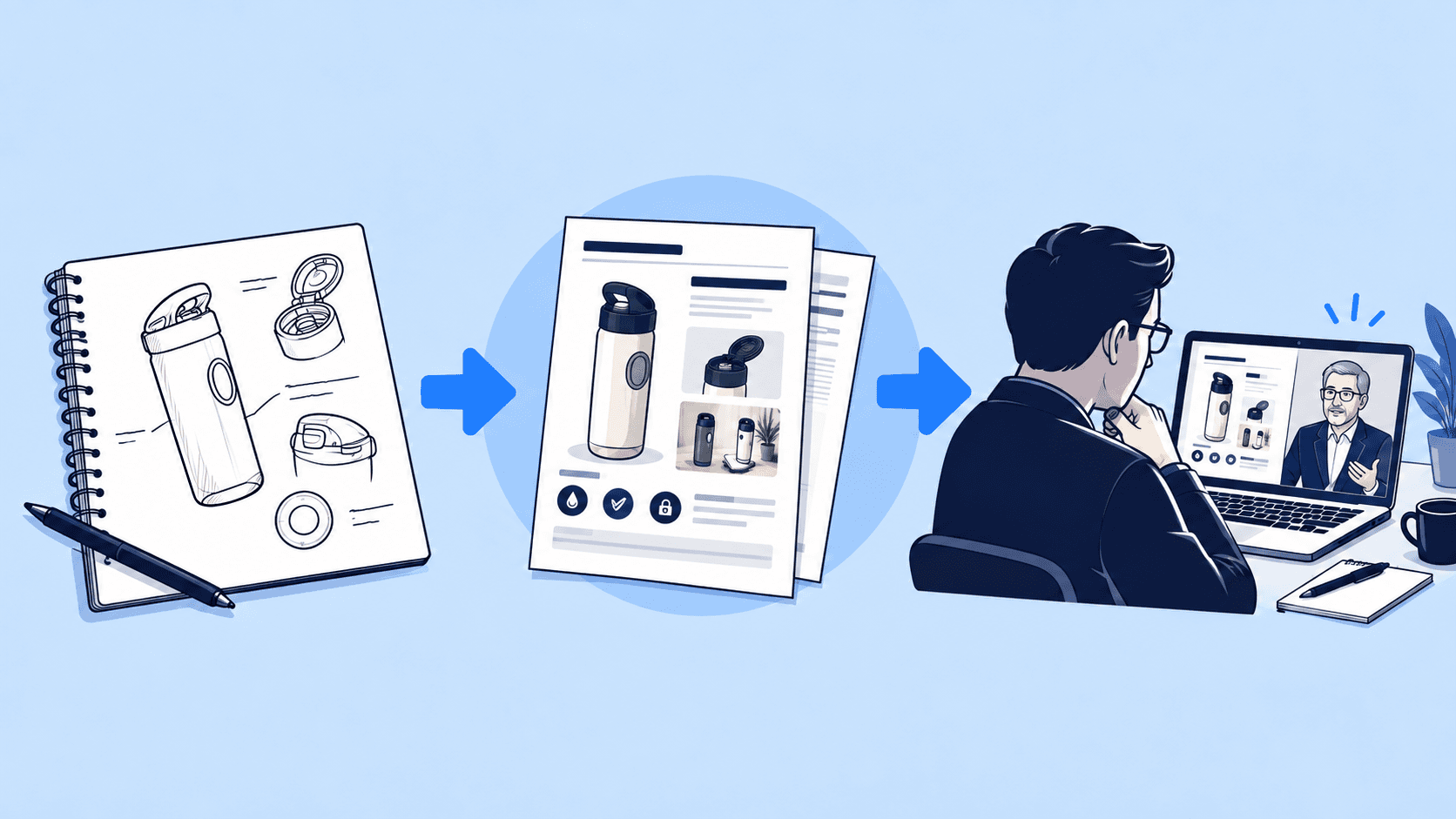
How to Create a Sell Sheet That Gets Companies Interested in Your Product
Learn how to create a product sell sheet for licensing that gets companies interested. Discover what to include, what to leave out, and how strong positioning can help your product stand out.
8 Things Companies Look for Before Licensing a Product
Want to sell an idea to a company? Learn what makes a product license-ready — from a licensing expert who's done it since his 20s.
