Licensing
How to License an Existing Product (When Sales Stall on Amazon or Online)

If you’re already selling a product and asking questions like:
- Why isn’t my product selling on Amazon?
- How do I get my product into retail stores?
- Should I license my invention instead of manufacturing it myself?
You’re not alone—and you’re not failing.
These are some of the most common questions inventors and small product businesses ask once they’ve moved past the idea stage and into the reality of selling.
This article answers a core question many experienced product creators are trying to solve:
When a product exists but isn’t scaling, is licensing the smarter next step?
My Product Is Selling, but Growth Is Stalled. What Now?
This is one of the most searched questions inventors ask:
“I invented a product, but I can’t sell it.”
After working with hundreds of people who have already commercialized a product—selling on Amazon, through their own websites, or in retail—a clear pattern emerges.
Often, the product itself isn’t the problem.
Many inventors reach this stage after:
- Launching on Amazon or Etsy
- Selling through their own website
- Landing a few small retail placements
From the outside, it looks like progress. But internally, sales feel flat, unpredictable, or too small to support real growth.This usually points to a distribution problem, not a product failure.
Why Products Stall on Amazon (The Amazon Trap)
Amazon is often where inventors get their first proof of demand—and where many get stuck.
Common issues include:
- High competition and copycats
- Thin margins due to ads and fees
- Constant inventory risk
- Growth tied directly to how much time and money you personally invest
Amazon can validate a product, but it rarely provides long-term leverage on its own.
This is why many people search:
- “My Amazon product isn’t selling—what now?”
- “How do I get out of the Amazon trap?”
Should I License My Product or Keep Selling It Myself?
This is the real decision point.
Selling it yourself gives you control—but also keeps you responsible for:
- Manufacturing
- Inventory
- Marketing
- Distribution
- Customer service
Licensing your product means:
- A company manufactures and sells it
- You earn royalties on sales
- You step away from daily operations
- Growth depends on the company’s distribution, not your bandwidth
Licensing is often the right path when:
- The product works, but scaling feels overwhelming
- Inventory risk is becoming stressful
- You want broader distribution (retail, international, mass market)
- You don’t want to run a manufacturing business
This is why so many inventors search:
- “Licensing vs selling your product”
- “When should I license my invention?”
How Do I License My Product to a Company?
Another common question:
“How do I find companies to license my product?”
Licensing typically involves:
- Protecting the idea with intellectual property
- Identifying companies that already sell similar products
- Presenting proof that the product works
- Negotiating a licensing agreement or royalty rate
What many inventors discover is that having proof doesn’t automatically create access.
You can have sales, patents, and inventory—and still struggle to get decision-makers to respond.
That’s because licensing isn’t about effort alone. It’s about leverage.
inventRight offers a library of free licensing resources covering everything from the basics to advanced strategies.
Proof vs. Leverage: Why Good Products Still Don’t Scale
Proof answers one question:
Does the product work?
Leverage answers a different one:
Can this scale without everything depending on me?
Without leverage, growth usually means:
- More inventory purchases
- More ad spend
- More personal risk
This is where many experienced inventors get stuck—not because they lack skill, but because they’ve outgrown the do-it-yourself model.
How Gateway Helps Inventors License Proven Products
inventRight’s Gateway program was created for inventors who already have proof and want to explore licensing, distribution, or strategic partnerships.
Gateway is not for idea-stage inventors.
It’s designed for people asking questions like:
- How do I license my product to a big company?
- How do I get my product into retail stores like Walmart or Target?
- Is licensing better than manufacturing for my situation?
Gateway focuses on:
- Turning proof into credible outreach
- Connecting inventors with companies that already have distribution
- Helping inventors evaluate licensing vs. continuing to sell
When Licensing Makes Sense—and When It Doesn’t
Licensing may be a strong option if:
- You’re stuck with inventory
- Sales are flat despite effort
- You don’t want to scale manufacturing yourself
- You want access to larger distribution channels
Licensing may not be the right fit if:
- You’re still validating the idea
- You want full operational control
- You enjoy running a product business day to day
Knowing the difference is critical.
The Bottom Line: You Don’t Have an Idea Problem
If your product exists but momentum is weak, the issue is rarely effort or intelligence.
Most often, it’s a lack of leverage and distribution.
Licensing is one path that allows inventors to scale without carrying the entire business alone—but it requires the right timing, structure, and partners.
If you’re exploring whether licensing is the right next step, learning how Gateway works can help you evaluate that decision clearly.
Learn more about inventRight’s Gateway program.
Contact inventRight
Reach the inventRight team with questions about commercializing an idea and/or scaling a product through licensing at +1 (800) 701-7993 and support@inventright.com.
inventRight Gateway is built for entrepreneurs who tried licensing before and didn’t get results. Instead of handling outreach yourself or hiring a generic marketing firm, our team professionally presents your product to targeted companies for licensing and continues outreach and follow-up until at least 10 companies respond.
This article addresses common inventor questions such as how to license an existing product, what to do when a product isn’t selling on Amazon, and how to choose between licensing and selling your product yourself.

About the contributor
Stephen KeyStephen Key is an award-winning inventor, renowned intellectual property strategist, lifelong entrepreneur, author, speaker, and columnist. Stephen has over 20 patents in his name and the dozens of concepts he has brought to market have retailed in Walmart, 7-Eleven, and Disney stores and parks worldwide and been endorsed by Michael Jordan, Alex Trebek, and Taylor Swift. He has defended his patents in federal court against the largest toy company in the world, Lego’s. In 1999, he cofounded inventRight to teach others his unique process for harnessing the power of open innovation and the licensing business model. His bestselling book about how to license an idea, One Simple Idea by McGraw-Hill, has been translated into six languages. He has written more than 1,000 articles about intellectual property strategy, product licensing, and entrepreneurship for publications online including Forbes, Inc., and Entrepreneur. Universities and governmental organizations around the world regularly invite him to teach them inventRight’s unique processes for commercializing new product ideas. Stephen has won over 20 industry awards, including two Edison Awards and the Most Influential and Inspiring Leader Of All Time by the WorldIP Forum in 2022. In 2018, he was recognized as a AAAS-Lemelson Invention Ambassador. In 2020, he became a founding member of the United States Intellectual Property Alliance. In 2022, Stephen contributed to “Cases in IP Strategy: Industry Lessons Learned” from the non-profit Michelson Institute for IP. Currently, he’s part of the team responsible for launching a new sustainable packaging innovation that replaces the need to use plastic to carry beverages called Fishbone.
More from Innovate This
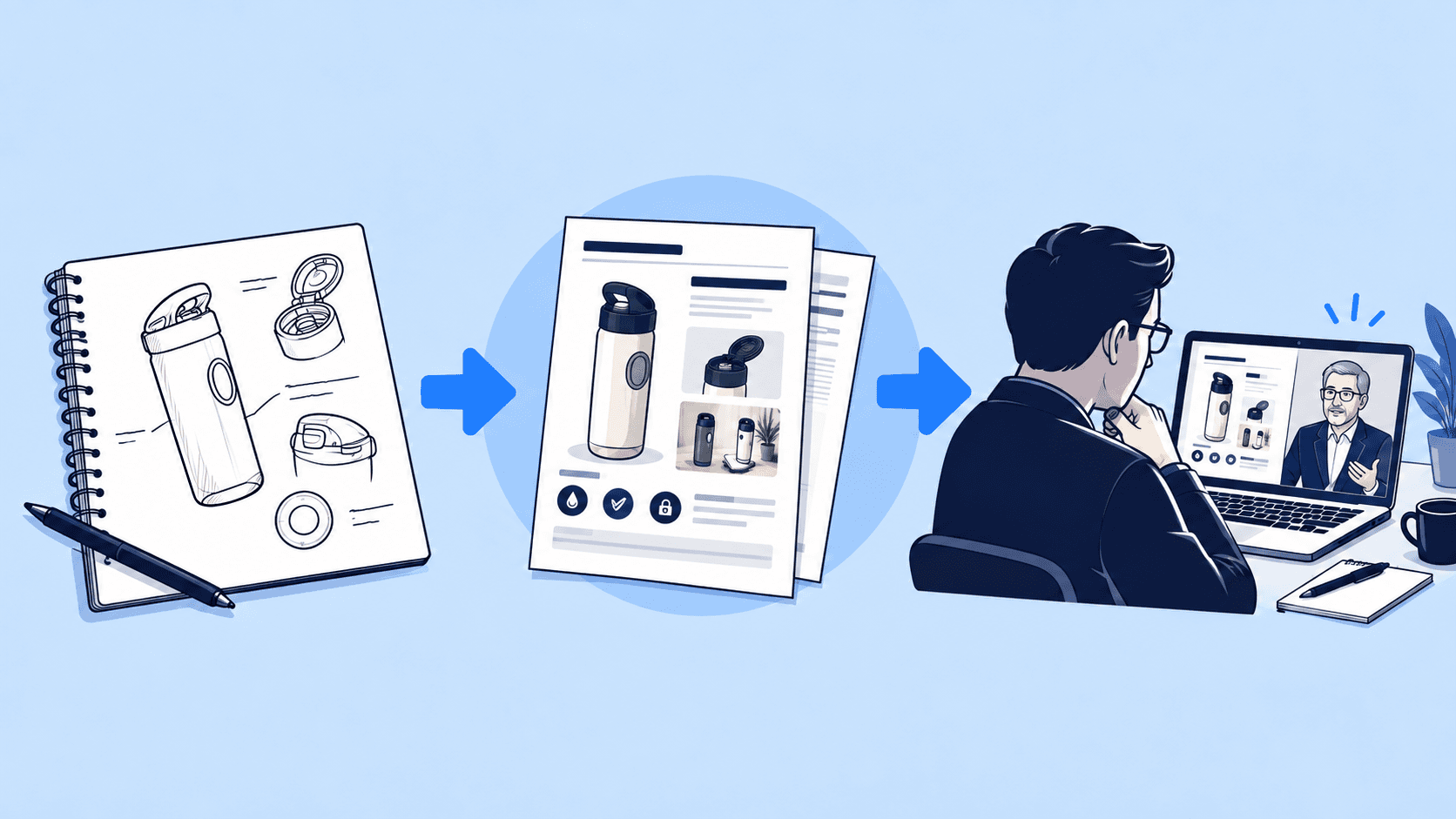
How to Create a Sell Sheet That Gets Companies Interested in Your Product
Learn how to create a product sell sheet for licensing that gets companies interested. Discover what to include, what to leave out, and how strong positioning can help your product stand out.
8 Things Companies Look for Before Licensing a Product
Want to sell an idea to a company? Learn what makes a product license-ready — from a licensing expert who's done it since his 20s.
