Licensing
How a $5 Prototype Led to a 7-Year Licensing Deal
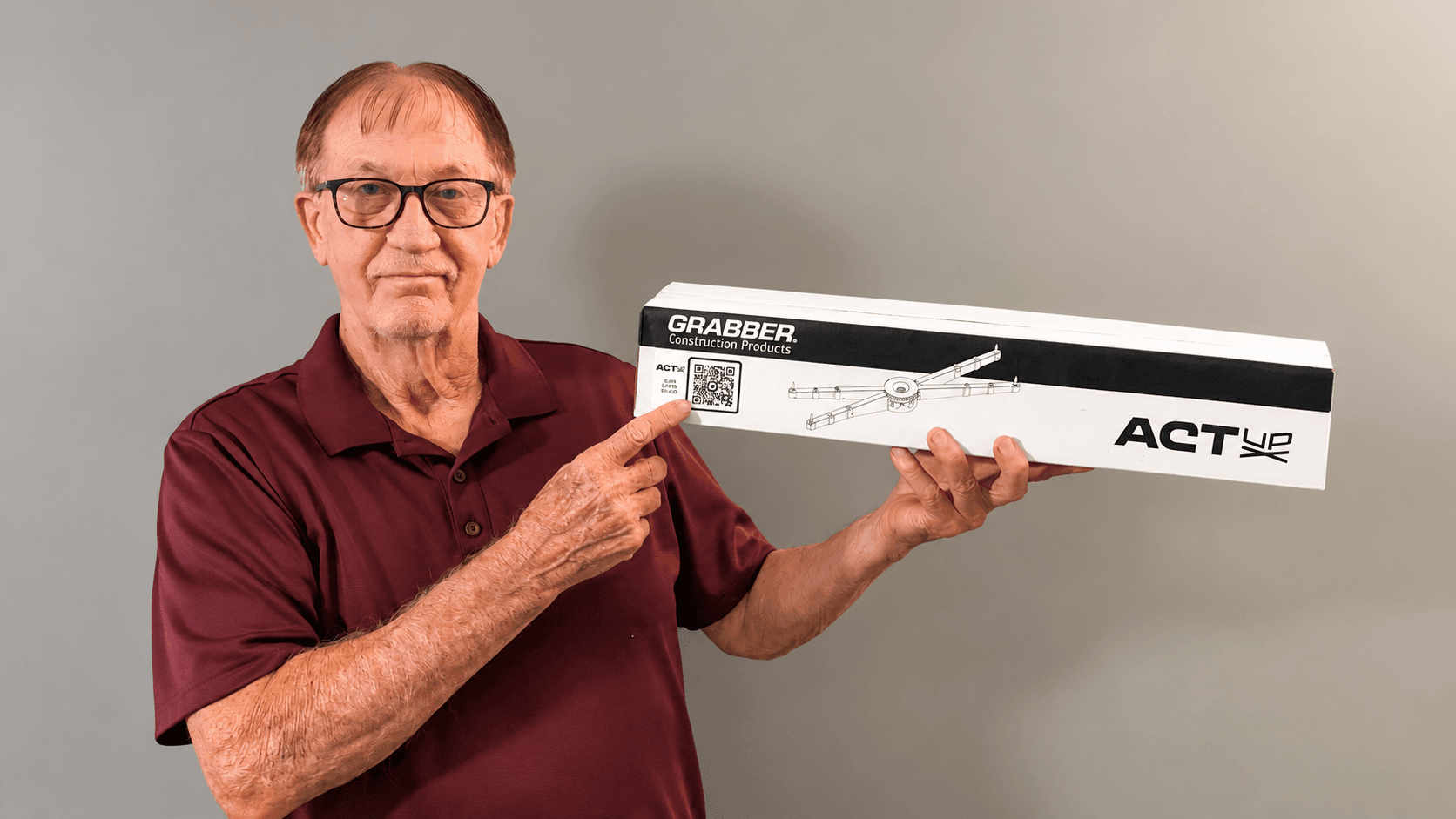
For nearly 20 years, Jerald Gunter dealt with the same problem.
Replacing ceiling tiles high above the floor meant bringing in scaffolding or renting a lift. The work was expensive, required multiple people, and put workers at dangerous heights.
Jerald knew the routine because he'd done it himself for years. Then one day, sitting in a movie theater and looking up at the ceiling, he decided there had to be a better way.
He took a piece of wood, hammered nails into the ends, attached a handle, and built a working prototype for about $5.
It worked.
Today, his invention is being used by AMC theaters nationwide, and he has a seven-year licensing agreement with Grabber Construction Products, which manufactures and markets the tool as ACTUp.
A $5 Prototype That Changed How Ceiling Tiles Are Replaced
Jerald's first prototype was remarkably simple: A piece of wood, a couple of nails, and a handle. With it, he could lift ceiling tiles into position 25 feet above the floor.
He continued refining the invention, eventually developing a tool that could be adjusted into three different positions and attached securely to an extension pole.
The improvement went far beyond convenience. It addressed the expense, labor, and safety risks of replacing ceiling tiles at height.
Jerald explained that in buildings with ceilings up to 16 feet high, workers could use his invention without climbing a ladder at all.
And the problem wasn't limited to movie theaters. Hotels, restaurants, offices, and other commercial buildings have ceiling tiles that need replacing.
Jerald had identified a widespread problem because he had spent years doing the work himself.

Jerald Gunter developed ACTUp after years of replacing ceiling tiles using scaffolding and lifts
How QuickPatents Helped Jerald Protect His Invention
As Jerald developed his invention, he worked with Kevin Prince, patent agent and founder of QuickPatents.
Kevin helped him obtain two design patents and a utility patent covering the tool's central mechanism.
Jerald was enthusiastic about the experience.
"I'm telling you, he was absolutely amazing in getting this done for me," he told inventRight cofounder Stephen Key during his inventRightTV interview.
Kevin also encouraged Jerald to read Stephen's best-selling book One Simple Idea, which explains how to develop and license inventions.
Jerald took the recommendation seriously, reading the book approximately three times to make sure he understood the licensing process.
A Company Responded to His Licensing Pitch in 30 Minutes
When Jerald contacted Grabber Construction Products, he already had something valuable: Proof that his invention worked.
AMC theaters were using the tool, and Jerald had a simple demonstration video showing a theater general manager installing a ceiling tile 26 feet above the floor while standing on a 10-foot stepladder.
The video showed exactly what the tool accomplished. Rather than asking Grabber to imagine how his invention might work, Jerald could demonstrate it.
Grabber responded to his email in approximately 30 minutes.
But that initial response was only the beginning. Jerald and Grabber communicated and developed the opportunity for close to a year before signing a seven-year product licensing agreement.
Getting a company's attention can happen quickly. Turning that interest into a licensing agreement takes continued communication, patience, and finding a good fit.
Why Jerald Chose Licensing Instead of Manufacturing For His Invention
While Jerald initially considered manufacturing the tool himself and finding a distributor, he ultimately recognized that Grabber Construction Products could accomplish things he wasn't equipped to do on his own.
"I don't think I would have had the capabilities to do what Grabber Construction Products have been able to do," he explained.
Through their seven-year licensing agreement, Jerald's invention became ACTUp, a commercial ceiling-tile installation and removal tool.
Grabber brought the invention into commercial production and developed its market presence through its manufacturing, marketing, and distribution capabilities.
You can see the finished product on Grabber's ACTUp product page, along with its features and applications.
This is one of the most compelling reasons to license an invention instead of manufacturing it yourself. You can partner with a company that already has the people, infrastructure, and relationships to bring your product to market.
What Made Jerald's Licensing Pitch Effective?
Jerald didn't approach Grabber with an abstract idea or a lengthy explanation of what his invention might accomplish.
He had a working product, a major customer already using it, and a simple video showing exactly how it worked.
The demonstration made the invention's value immediately understandable. A theater manager was installing a ceiling tile 26 feet above the floor using Jerald's tool.
Grabber could see the problem and the solution.
Jerald had also approached a company whose existing business made it a logical licensing partner. Grabber already manufactured and distributed construction products, so his invention fit a market the company understood.
For anyone learning how to license an invention, that's an important lesson: A compelling pitch is simple. It needs to show a relevant company what the product does, why it matters, and how it fits its business.
A Simple Idea With a Much Bigger Impact
During his interview with Stephen Key, Jerald admitted he was still processing how quickly his invention had taken off.
He hadn't anticipated the scale of the opportunity. But what stood out most was his satisfaction in developing something that worked and addressed a serious safety problem.
After years of renting lifts, using scaffolding, and struggling with ceiling tiles, he had found a better way. And instead of taking on the expense and complexity of manufacturing the product himself, he partnered with a company that could take it further than he could on his own.
It started with a $5 prototype. Today, it's a commercially manufactured product backed by a seven-year licensing agreement.
This inventRightTV interview was sponsored by QuickPatents, founded by registered patent agent Kevin Prince. Kevin helped Jerald protect his invention with two design patents and a utility patent and encouraged him to learn about licensing through Stephen Key's book One Simple Idea.
Have an invention you want to protect? Schedule a free consultation with QuickPatents to learn more.
More from Innovate This
How to Create a Sell Sheet That Gets Companies Interested in Your Product
Learn how to create a product sell sheet for licensing that gets companies interested. Discover what to include, what to leave out, and how strong positioning can help your product stand out.
8 Things Companies Look for Before Licensing a Product
Want to sell an idea to a company? Learn what makes a product license-ready — from a licensing expert who's done it since his 20s.
