Licensing
We Asked Companies What Products They Want. Here's What They Told Us.

What are companies looking for?
It's one of the biggest questions inventors who are licensing ask us — and historically, one of the hardest to answer. For a long time, the honest answer was: It depends, and you usually can't know until you ask.
So our Gateway team started asking.
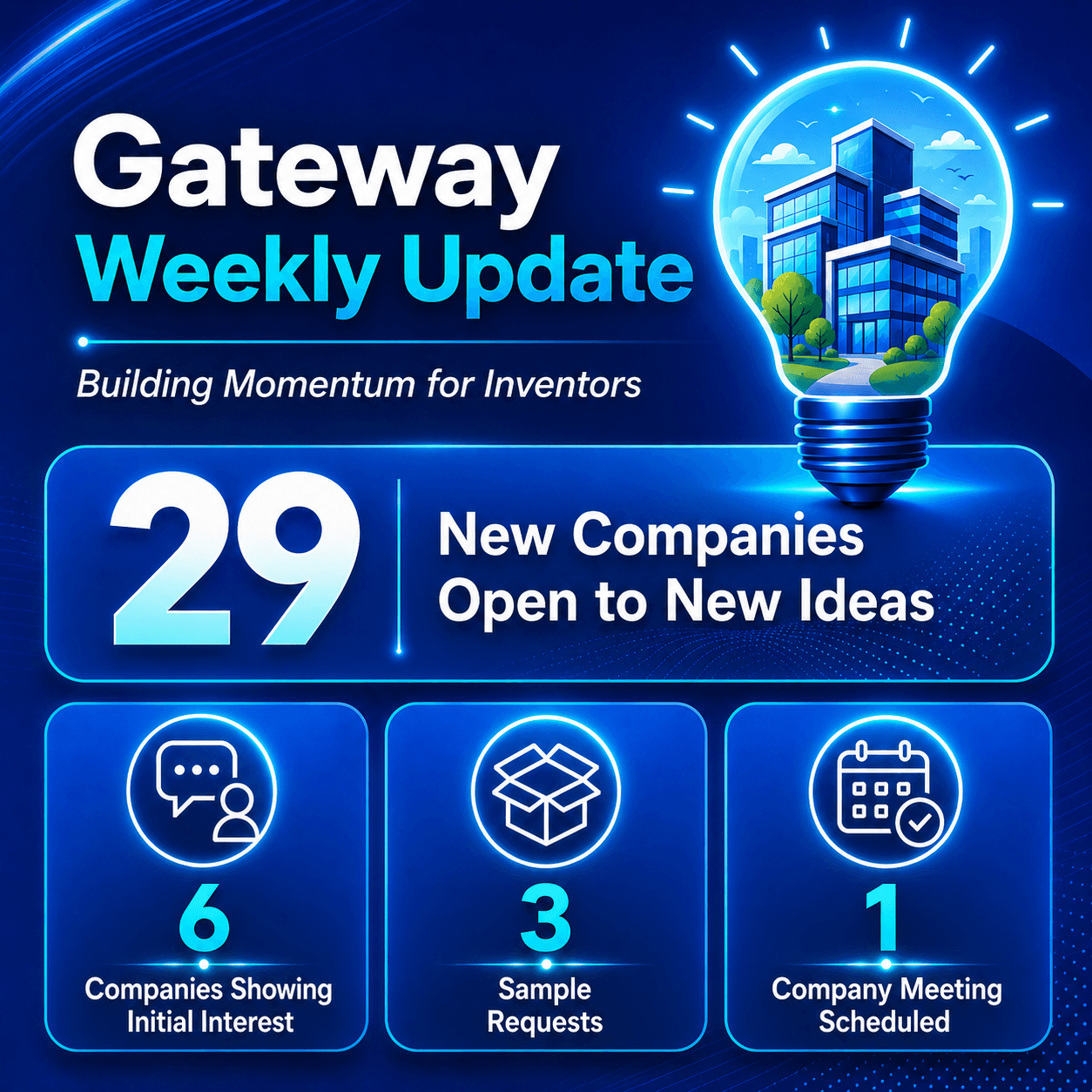
Gateway is inventRight's product licensing service. Dana Knowles, Director of Gateway, and her team reach out to companies on behalf of inventors every day — pitching products, managing the back-and-forth, following up until they get a real answer. Every Monday, I get a report: How many new companies opened up to outside ideas that week, how many sell sheets got reviewed, how many wish lists came back, how many companies requested meetings and samples, plus more.
That wish list is where this gets interesting.
A few months ago, Dana's team started ending every outreach with one simple question: "What are you looking for in terms of new products?”
Not every company answers. But the ones who do are telling us something most inventors never get to hear.
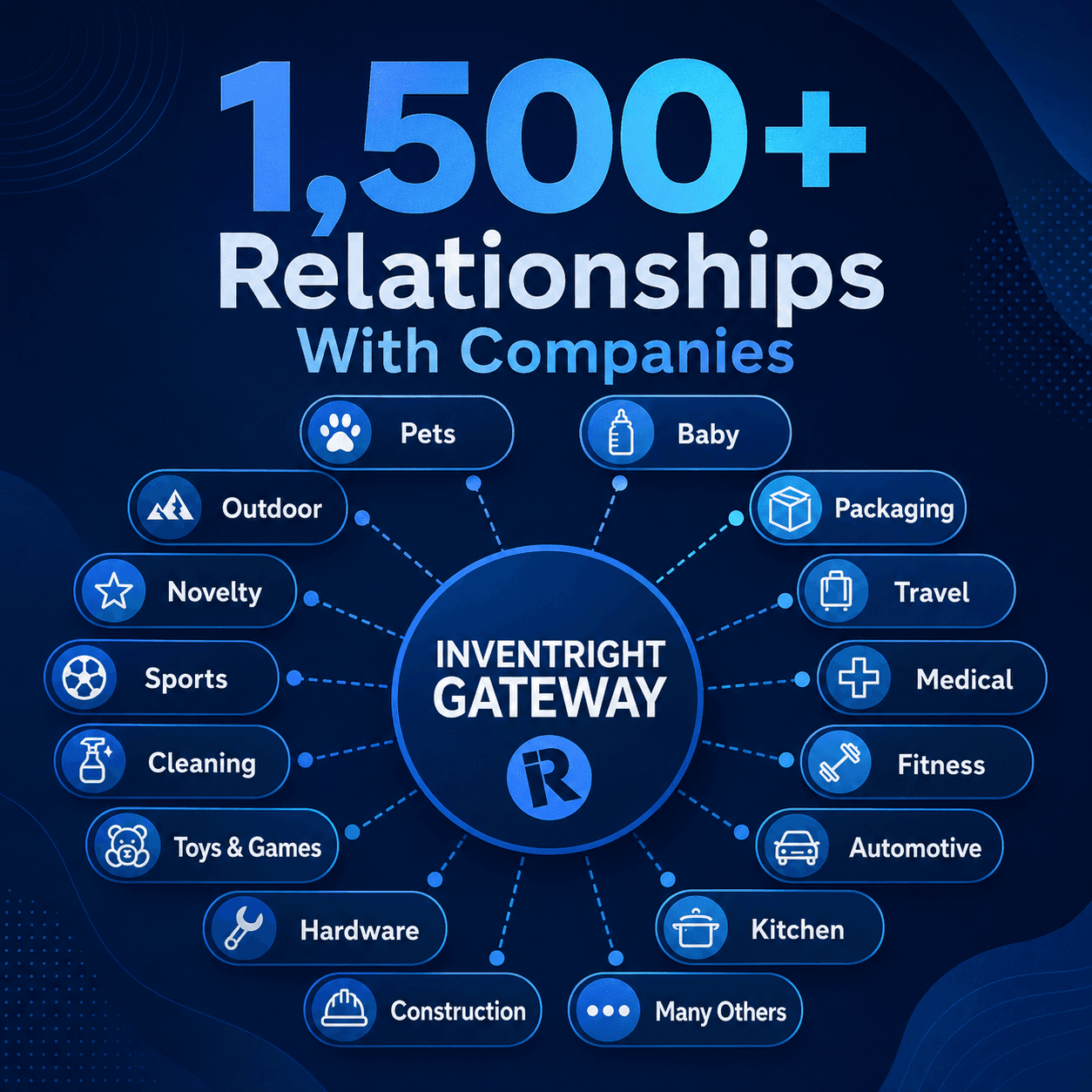
Today, Gateway has relationships with more than 1,500 companies open to reviewing outside product ideas. When you're having that many conversations across that many industries, patterns start to emerge.
We’re not guessing about what the market wants anymore. We're asking it directly.
What Companies Are Looking For Is More Specific Than You Think
Let me explain.
A company in the baby and children's furniture space didn't just say "send us baby products." They told us they were expanding beyond cribs, nursery seating, mattresses, and case goods into kids' furniture, bunks, bedding, and accessories. That's a specific, widening opportunity window — and now we know about it.
A stroller and highchair manufacturer told us, point blank, that real innovation in their categories is rare — and that's exactly where their interest is.
A company in the pet health and wellness space told us they were focused specifically on "remedies and H&W."
This isn't vague feedback. This is the marketplace talking, in its own language.
Companies in the Same Industry Are Looking for Completely Different Ideas
One thing these wish lists revealed is how different companies can be within the same industry.
Take pets.
A pet company focused on health and wellness wants nothing to do with the same invention as a pet company built around interactive toys. A company expanding through licensing into leather goods and cosmetics is fishing in a different pond than one focused on post-surgery recovery products.
From the outside, they're all "pet companies."
From the inside, they're operating in completely different lanes.
This matters because pitching your invention for licensing isn't really about finding the right industry. It's about finding the right lane inside that industry. That's where licensing deals get won — or lost before they ever start.
Some Companies Want New Ideas. Others Want the Opposite.
For years, I've told inventors they don't need to reinvent the wheel to license a product. A smart, simple improvement to an existing product can be powerful — the market already exists, the company already understands the category, and the customer already understands the problem.
But not every company agrees with me.
One swimming pool company told our team flat out: They weren't interested in small twists on what already existed. They wanted something they'd never seen before. Period.
Compare that to OXO — a company that states right in its own mission that what it does is take ideas that have been around forever and simply make them better. They don't want anything new at all. Most people never read far enough to find that out.
There's no universal answer here. The real question isn't "is this a good idea." It's "what does this specific company want, right now?"
What It Really Means When a Company Passes on Your Idea
This is one of the biggest lessons I wish more inventors understood.
A pass is not a verdict on your invention. It's data.
One kitchen products company passed on an invention but told us directly: The design was strong, the category was strong, the product was marketable. They simply weren't adding that type of product right now. That's an entirely different message than "no one wants this."
Sometimes a "no" isn't even consistent. Dana told me about one company where the CEO personally replied, "Sure, send it over" — and then customer service wrote back saying they weren't accepting outside ideas at all. Companies are made of people, and people don't always agree with each other.
How to Know When a Company Is Seriously Interested in Your Idea

When inventors imagine a company being interested, they picture a fast yes.
That's almost never how it goes.
In the real world, licensing interest sounds like questions.
Dimensions. Suggested retail price. Sourcing. Whether a prototype exists. Royalty expectations. Manufacturing cost. Market size.
One music equipment company didn't say yes, and didn't say no. They asked: "I assume you guys design these for specific headstocks, then leave it up to us to source at our best cost — what's the general royalty rate you're looking for?"
That's not rejection; that's evaluation.
One industrial company moved a product into a full internal review — financials, market size, product variations, customer validation, manufacturing assumptions, regulatory questions, the whole commercialization strategy. That's not a casual glance. That's a company trying to decide whether your invention can become a real piece of their business.
What These Company Wish Lists Reveal About Product Licensing
At inventRight, we've always taught inventors to study the marketplace before falling in love with their own idea.
It's not the fun part. Most creative people want to build, protect, and imagine — not research.
But companies aren't evaluating your idea in isolation. They're asking: Does this fit our line? Does it solve a real problem for our customer? Can we make it? Can we sell it? Does the price work? Is the timing right? Is this category even a priority for us this year?
The better you understand what a company is already looking for, the better your odds of putting something in front of them they can actually use.
The Biggest Lesson About What Companies Are Really Looking For
Companies looking for ideas are not as mysterious as they seem.
Many of them will tell you exactly what they want, what concerns them, why they passed, and when a product is close but not quite right for licensing. The challenge isn't decoding them. It's getting to the right person, asking the right question, and staying in the conversation long enough to get an honest answer.
That's what Gateway was built to do.
Don't just ask, "Is my idea good?" Ask, "Who is this idea right for?"
That's where product licensing actually begins!
Want to better understand how Gateway helps inventors get their products in front of companies? Watch our new video here:
Want a team finding out what companies want before you ever send a single email? That's exactly what Gateway does. We identify companies likely to be a fit for your invention, prepare your marketing materials, and manage outreach and follow-up — including asking companies directly what they're looking for next. Our guarantee: Real responses from at least 10 companies, not submissions sent into silence. Or your money back. If a company wants to move forward, we'll also help negotiate the licensing agreement so it's fair and balanced on your behalf.
Reach the inventRight team at 1-800-701-7993 or support@inventright.com.

About the contributor
Stephen KeyStephen Key is an award-winning inventor, renowned intellectual property strategist, lifelong entrepreneur, author, speaker, and columnist. Stephen has over 20 patents in his name and the dozens of concepts he has brought to market have retailed in Walmart, 7-Eleven, and Disney stores and parks worldwide and been endorsed by Michael Jordan, Alex Trebek, and Taylor Swift. He has defended his patents in federal court against the largest toy company in the world, Lego’s. In 1999, he cofounded inventRight to teach others his unique process for harnessing the power of open innovation and the licensing business model. His bestselling book about how to license an idea, One Simple Idea by McGraw-Hill, has been translated into six languages. He has written more than 1,000 articles about intellectual property strategy, product licensing, and entrepreneurship for publications online including Forbes, Inc., and Entrepreneur. Universities and governmental organizations around the world regularly invite him to teach them inventRight’s unique processes for commercializing new product ideas. Stephen has won over 20 industry awards, including two Edison Awards and the Most Influential and Inspiring Leader Of All Time by the WorldIP Forum in 2022. In 2018, he was recognized as a AAAS-Lemelson Invention Ambassador. In 2020, he became a founding member of the United States Intellectual Property Alliance. In 2022, Stephen contributed to “Cases in IP Strategy: Industry Lessons Learned” from the non-profit Michelson Institute for IP. Currently, he’s part of the team responsible for launching a new sustainable packaging innovation that replaces the need to use plastic to carry beverages called Fishbone.
More from Innovate This
How to Create a Sell Sheet That Gets Companies Interested in Your Product
Learn how to create a product sell sheet for licensing that gets companies interested. Discover what to include, what to leave out, and how strong positioning can help your product stand out.
8 Things Companies Look for Before Licensing a Product
Want to sell an idea to a company? Learn what makes a product license-ready — from a licensing expert who's done it since his 20s.
