Amazon
If You’re Thinking About Launching Your Product on Amazon, You Might Be Making an Expensive Mistake
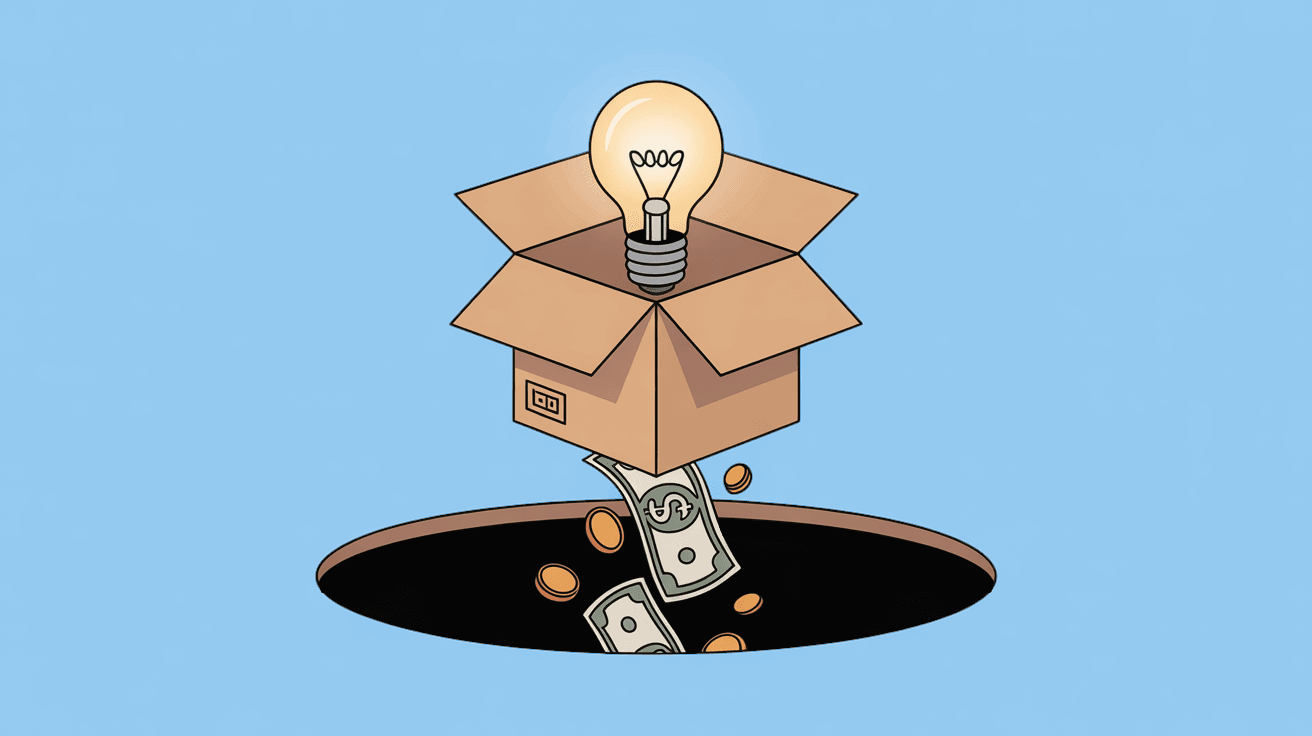
There’s a familiar story everywhere online: Come up with a product idea, launch it on Amazon, and build a successful business.
It sounds simple. It sounds accessible. And for many product developers, it feels like the obvious next step.
But there’s a problem: That version of reality is outdated.
Today, selling on Amazon is no longer a beginner-friendly shortcut — it’s a highly competitive, capital-intensive business model. And for many product developers, it’s not the smartest path forward.
The Hidden Cost of “Starting a Business”
Most people underestimate what it actually takes to build a product business.
Before you ever make your first sale, you’re dealing with:
-
Product development and sourcing
-
Manufacturing minimum order quantities (MOQs)
-
Packaging, branding, and compliance
-
Shipping and logistics
-
Inventory risk
This process can take months, and require thousands (or tens of thousands) of dollars, before you even know if your product will succeed.
And then comes Amazon.
Amazon Is Not a Marketplace; It’s a Machine
Selling on Amazon today means plugging into a system that demands constant input:
-
You pay for visibility (ads are no longer optional)
-
You compete against thousands of similar products
-
Your margins are reduced by fees, returns, and promotions
-
Your account can be suspended without warning
You’re not just launching a product. You’re operating a full-scale business inside someone else’s ecosystem.
And that ecosystem is built for scale, not simplicity.
Markets Change, And Amazon Is No Exception
Like everything else in business, marketplaces evolve.
What worked early on rarely works the same way later. The sellers who entered Amazon years ago were operating in a completely different environment—less competition, lower costs, and far more organic reach.
That’s no longer the case.
Today, Amazon is more crowded, more expensive, and far less forgiving—especially for product developers entering the market for the first time.
We’ve seen this same pattern before.
Take Facebook advertising. In the early days, ads were inexpensive and highly effective. But as larger companies entered the platform, competition increased, costs rose, and profitability became harder to maintain.
Now it costs significantly more to acquire a customer than it did just a few years ago.
Amazon has followed the same trajectory:
-
More competition
-
Higher acquisition costs
-
Lower margins
Spend any time on LinkedIn and you’ll see product developers talking about this shift almost daily. Rising costs, shrinking margins, and increasing complexity are common themes.
This isn’t about complaining; it’s about understanding reality.
Markets mature. Platforms evolve. Competition increases.
The key is making decisions based on how things work today—not how they used to work.
The Knockoff Problem: Success Attracts Competition Fast
If your product is successful, competition is coming—and it’s coming fast.
Today, sellers across multiple platforms constantly scan for products that are gaining traction. When they find one, they move quickly to reproduce it—often at a lower price.
Even if you’ve filed for intellectual property protection, enforcement becomes a constant battle:
-
Copycat listings can appear within weeks, or even days
-
Lower-priced imitations can undercut your margins
-
You may spend significant time and money policing listings and filing complaints
Many product developers find themselves not just running a business—but defending it. And that’s a role most people never planned for.
The Numbers Don’t Lie: Most Products Don’t Succeed on Amazon
One of the biggest misconceptions product developers have is believing that if they launch a “good product,” it will succeed.
The reality is harsh:
-
Up to 90% of new Amazon sellers fail
-
Around 60–68% don’t survive their first year
-
Only about 10% achieve long-term, sustainable success
Even experienced sellers often describe Amazon success as a “numbers game,” where multiple product launches are required just to find one winner.
For product developers, that creates a serious problem.
Every product you launch requires:
-
Capital
-
Time
-
Inventory
-
Marketing spend
When failure rates are this high, you’re not just testing ideas—you’re absorbing real financial losses along the way.
The Harsh Reality: Most Product Developers Don’t Win on Amazon
Amazon rewards businesses that already have:
-
Capital to invest in advertising
-
Teams to manage operations
-
Systems to optimize performance
-
Resources to defend their brand
If you’re a solo product developer—or even a small team—you’re stepping into a system where the odds are not in your favor.
That doesn’t mean success is impossible. But it does mean it’s far more difficult, expensive, and time-consuming than most people expect.
So What’s the Alternative?
If your real goal is to get your product into the market, there’s another path that many product developers overlook: Product licensing.
Instead of building an entire business around your product, you partner with a company that already has:
-
Manufacturing infrastructure
-
Distribution channels
-
Retail relationships
-
Marketing capabilities
You focus on developing the product. They handle everything else.
Why Product Licensing Makes Even More Sense Today
Product licensing doesn’t just reduce risk—it gives you advantages that are extremely difficult to replicate on your own.
Instead of taking on all the cost and complexity, product developers can:
-
License their product to an established company
-
Earn royalties on sales
More importantly, you gain access to speed, scale, and protection:
Speed to Market
Established companies can move faster with manufacturing, logistics, and retail rollout.
Advertising Power
They have significantly larger ad budgets, allowing your product to compete immediately.
Legal Protection
They often have legal teams in place to monitor and act against knockoffs — something extremely difficult for individual product developers to manage alone.
Built-In Distribution
You’re plugging into systems that already exist, rather than trying to build them from scratch.
Licensing Is Not About Avoiding Work; It’s About Choosing the Right Work
Product licensing isn’t easy.
It requires persistence, outreach, and strong ideas. But the nature of the work is different.
Instead of managing ads, inventory, logistics, and enforcement, you focus on:
-
Product innovation
-
Market fit
-
Strategic partnerships
You’re not trying to become an e-commerce operator. You’re operating as a product developer: Bringing ideas to market through companies that already know how to scale and protect them.
We talk more about this approach on our YouTube channel, inventRightTV, where we share licensing advice, inventor interviews, and practical guidance for bringing product ideas to companies.
The Smarter Question to Ask
Instead of asking: “Should I sell this on Amazon?”
A better question is: “Do I want to build a business—or do I want to get this product into the world?”
Those are two very different paths.
Amazon is one way to build a business.
Product licensing is a way to bring a product to market without building the entire business around it.
Final Thoughts
Amazon can still work, but it’s no longer the obvious or easiest path it once was.
For many product developers, jumping into a crowded, expensive, and complex marketplace — while also defending against fast-moving competition — isn’t the best first move.
The smarter approach is to understand the full picture before investing your time and money.
Because when you do, you may realize there’s a better path — one that gives you access to speed, scale, protection, and distribution — without taking on all the risk yourself.
Sometimes, the smartest way forward isn’t to compete harder…
It’s to choose a different path.
Hear directly from people like you about the challenges and opportunities of selling on Amazon today.
Watch Nick Norman share the story of Polar Protector:
Watch Tom Mitchell share the story of the Dex Fingerlight:
Watch Laura Toto share the story of Naked No More:
You can also read stories from inventors who worked with inventRight to bring their products to market through licensing on our testimonial page: https://inventright.com/testimonials
Contact inventRight For Licensing Help
Reach the inventRight team with questions about licensing your product at +1 (800) 701-7993 or support@inventright.com.
inventRight Gateway is for product developers who do not want to manage licensing outreach on their own. Our team professionally presents your idea to targeted companies and continues outreach and follow-up until at least 10 companies review your product. Responses guaranteed, or your money back.

About the contributor
Stephen KeyStephen Key is an award-winning inventor, renowned intellectual property strategist, lifelong entrepreneur, author, speaker, and columnist. Stephen has over 20 patents in his name and the dozens of concepts he has brought to market have retailed in Walmart, 7-Eleven, and Disney stores and parks worldwide and been endorsed by Michael Jordan, Alex Trebek, and Taylor Swift. He has defended his patents in federal court against the largest toy company in the world, Lego’s. In 1999, he cofounded inventRight to teach others his unique process for harnessing the power of open innovation and the licensing business model. His bestselling book about how to license an idea, One Simple Idea by McGraw-Hill, has been translated into six languages. He has written more than 1,000 articles about intellectual property strategy, product licensing, and entrepreneurship for publications online including Forbes, Inc., and Entrepreneur. Universities and governmental organizations around the world regularly invite him to teach them inventRight’s unique processes for commercializing new product ideas. Stephen has won over 20 industry awards, including two Edison Awards and the Most Influential and Inspiring Leader Of All Time by the WorldIP Forum in 2022. In 2018, he was recognized as a AAAS-Lemelson Invention Ambassador. In 2020, he became a founding member of the United States Intellectual Property Alliance. In 2022, Stephen contributed to “Cases in IP Strategy: Industry Lessons Learned” from the non-profit Michelson Institute for IP. Currently, he’s part of the team responsible for launching a new sustainable packaging innovation that replaces the need to use plastic to carry beverages called Fishbone.
More from Innovate This
How to Create a Sell Sheet That Gets Companies Interested in Your Product
Learn how to create a product sell sheet for licensing that gets companies interested. Discover what to include, what to leave out, and how strong positioning can help your product stand out.
8 Things Companies Look for Before Licensing a Product
Want to sell an idea to a company? Learn what makes a product license-ready — from a licensing expert who's done it since his 20s.
