Licensing
My Biggest Licensing Mistake: Learn from It
So, you’ve got a licensing agreement, but you’re not sure what impact it might have down the road or what problems could arise. Please read this article because I’m going to share one of the mistakes I made so you don’t have to make the same one.
My Biggest Licensing Mistake: Not Understanding the Non-Exclusive Clause
One of my big ideas was called Spin Formation. It was a rotating label that I licensed to one of the largest label companies in the world, CCL Label. I remember when I was negotiating that licensing agreement, there were some things I didn’t really understand. So I'm going to talk about what happened so you can avoid this problem.
CCL Label was selling a lot of my rotating labels. It was winning awards. We were selling tens of millions of these labels, and everything was going great for years. But then, something went wrong. After years of selling my rotating label in many categories, from vitamins to water to liquor, they decided they wanted to go in another direction.
They decided they wanted out of the contract. They were tired of paying me a lot of money for the minimum guarantees, which had become a cash cow for me. The top management said, "We need to change this up," and they did something I didn’t foresee. I didn’t realize the impact it would have on me until later.
So, what did they do? It’s simple. They said, “Steve, we’re not going to pay the minimum guarantees anymore.” I was shocked. They still wanted to use and sell my label, but without paying the minimum guarantees. The contract stated that if they breached it, the deal would become non-exclusive, meaning they could still sell my product.
So, what does that really mean? When the agreement went non-exclusive, it seemed like it might be a good thing, but it actually created a problem. Because they still had rights to the technology, they no longer had to pay the minimum guarantees. This let them off the hook financially but kept them involved in selling my product. The downside? I couldn't offer anyone else an exclusive deal that could have brought in more value, since CCL was still in the picture.
When you’re entering into a licensing agreement, it’s crucial to understand the impact of every clause. This is one of those details that might not seem important at first but can have significant consequences later on. I've done hundreds of contracts, seen thousands more, and I’ve learned how important it is to know what can happen after you sign.
If you don’t have the right knowledge, you can get hurt. That’s why you need someone with a lot of experience in licensing agreements—someone who’s been in the industry for a long time and knows what to expect down the road.
Here’s the key point: if the company didn’t meet the minimum guarantees, the agreement became non-exclusive. I didn’t realize the impact of this clause at the time. It seemed okay, but it wasn’t, because it didn’t allow me to go after other companies to sell the technology.
In the end, I did manage to license it to other companies, and someone eventually bought the patent portfolio. So it didn’t hurt me too much, but it did reduce the value. We still had the option to work with the original company, but without the minimum guarantees, they weren’t as committed.
Here’s another thing you can do. Even if your contract goes non-exclusive, you can still include minimum guarantees. They might not be as high, but you’ll still get paid for giving them rights. In a non-exclusive deal, they’re getting rights to your product, but without paying you. That’s why it’s important to ensure some form of payment, like minimum guarantees, even in a non-exclusive agreement.
Key Takeaways
So, what’s the main point here? You need to understand the impact of every part of a licensing agreement. If something doesn't go as planned, companies might breach these contracts, and you need to be ready to handle it.
I want to introduce you to a program called Gateway. If you have an idea but are struggling to connect with the right companies or people, or if you have a product that's not doing well on Amazon or other platforms and you need help licensing it, please reach out to us. Our Gateway program handles all the hard work for you.
We find the right companies and contacts, ensure your marketing materials are on point, and make sure your intellectual property is protected. We work to get the best deal for you. Check out Gateway, give us a call, and see if it’s the right fit for you.

About the contributor
Stephen KeyStephen Key is an award-winning inventor, renowned intellectual property strategist, lifelong entrepreneur, author, speaker, and columnist. Stephen has over 20 patents in his name and the dozens of concepts he has brought to market have retailed in Walmart, 7-Eleven, and Disney stores and parks worldwide and been endorsed by Michael Jordan, Alex Trebek, and Taylor Swift. He has defended his patents in federal court against the largest toy company in the world, Lego’s. In 1999, he cofounded inventRight to teach others his unique process for harnessing the power of open innovation and the licensing business model. His bestselling book about how to license an idea, One Simple Idea by McGraw-Hill, has been translated into six languages. He has written more than 1,000 articles about intellectual property strategy, product licensing, and entrepreneurship for publications online including Forbes, Inc., and Entrepreneur. Universities and governmental organizations around the world regularly invite him to teach them inventRight’s unique processes for commercializing new product ideas. Stephen has won over 20 industry awards, including two Edison Awards and the Most Influential and Inspiring Leader Of All Time by the WorldIP Forum in 2022. In 2018, he was recognized as a AAAS-Lemelson Invention Ambassador. In 2020, he became a founding member of the United States Intellectual Property Alliance. In 2022, Stephen contributed to “Cases in IP Strategy: Industry Lessons Learned” from the non-profit Michelson Institute for IP. Currently, he’s part of the team responsible for launching a new sustainable packaging innovation that replaces the need to use plastic to carry beverages called Fishbone.
More from Innovate This
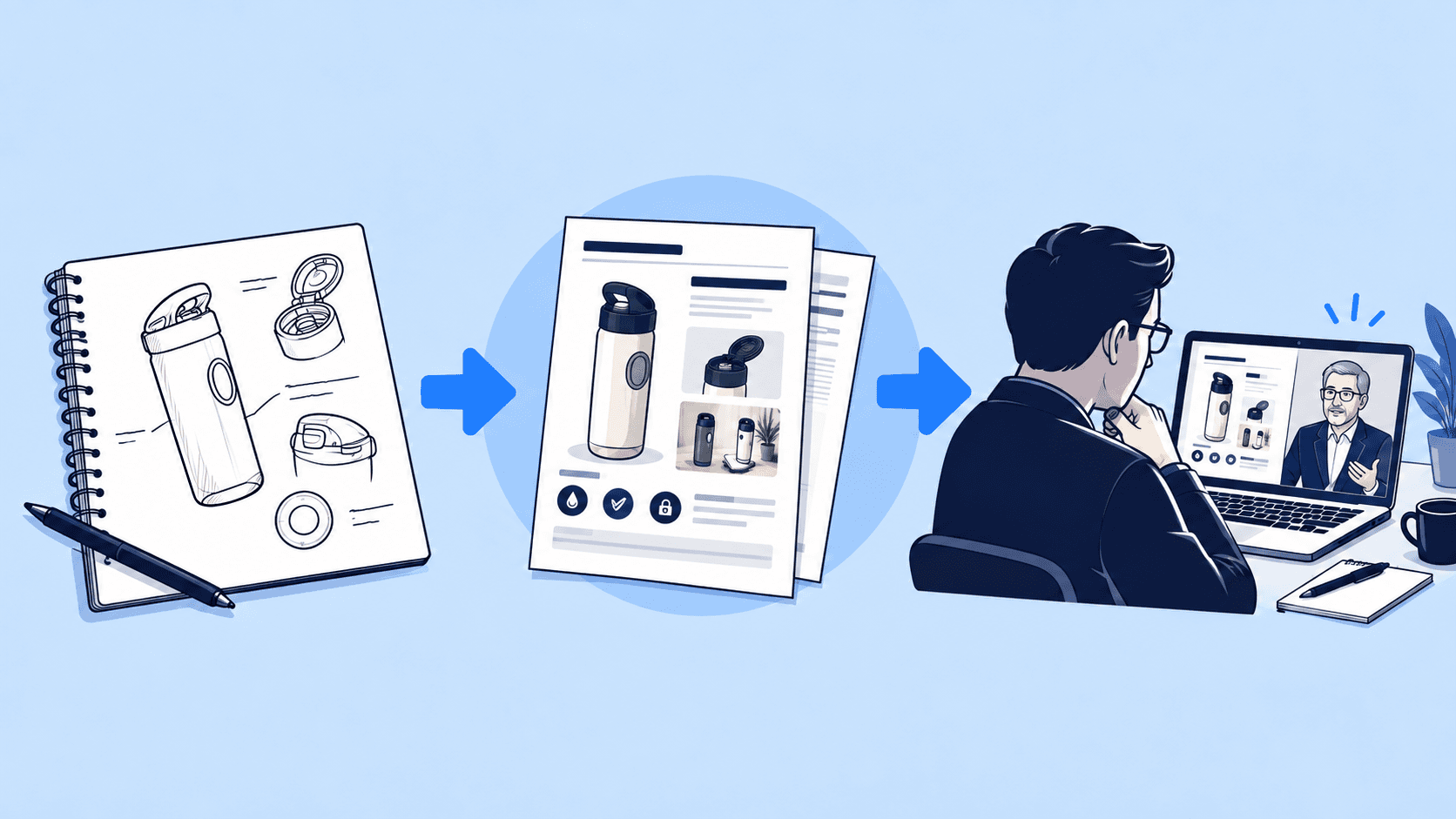
How to Create a Sell Sheet That Gets Companies Interested in Your Product
Learn how to create a product sell sheet for licensing that gets companies interested. Discover what to include, what to leave out, and how strong positioning can help your product stand out.
8 Things Companies Look for Before Licensing a Product
Want to sell an idea to a company? Learn what makes a product license-ready — from a licensing expert who's done it since his 20s.
