Licensing
How to Sell an Idea to a Company: 8 Things That Actually Matter
I've been licensing my own product ideas — and helping others sell an idea to a company — since my late 20s. Over the years, one question keeps coming up:
"What makes a product a good candidate for licensing?"
The answer is not radical innovation. In fact, the products that successfully get licensed tend to follow very practical patterns that are easy to overlook if you're focused only on invention for invention's sake. If you're trying to figure out how to pitch an idea to a company for licensing and actually get a yes, here's what really matters.
1. Easy to Understand — No Education Required
If a product needs a long explanation, it's already at a disadvantage.
Companies don't want to spend time educating the market on how something works. Consumers don't either. Education takes time, effort, and marketing dollars.
The best ideas to pitch to a company pass what I call the five-second test: Can someone understand what it is and why it matters almost instantly? If not, it's going to struggle — no matter how clever it is.
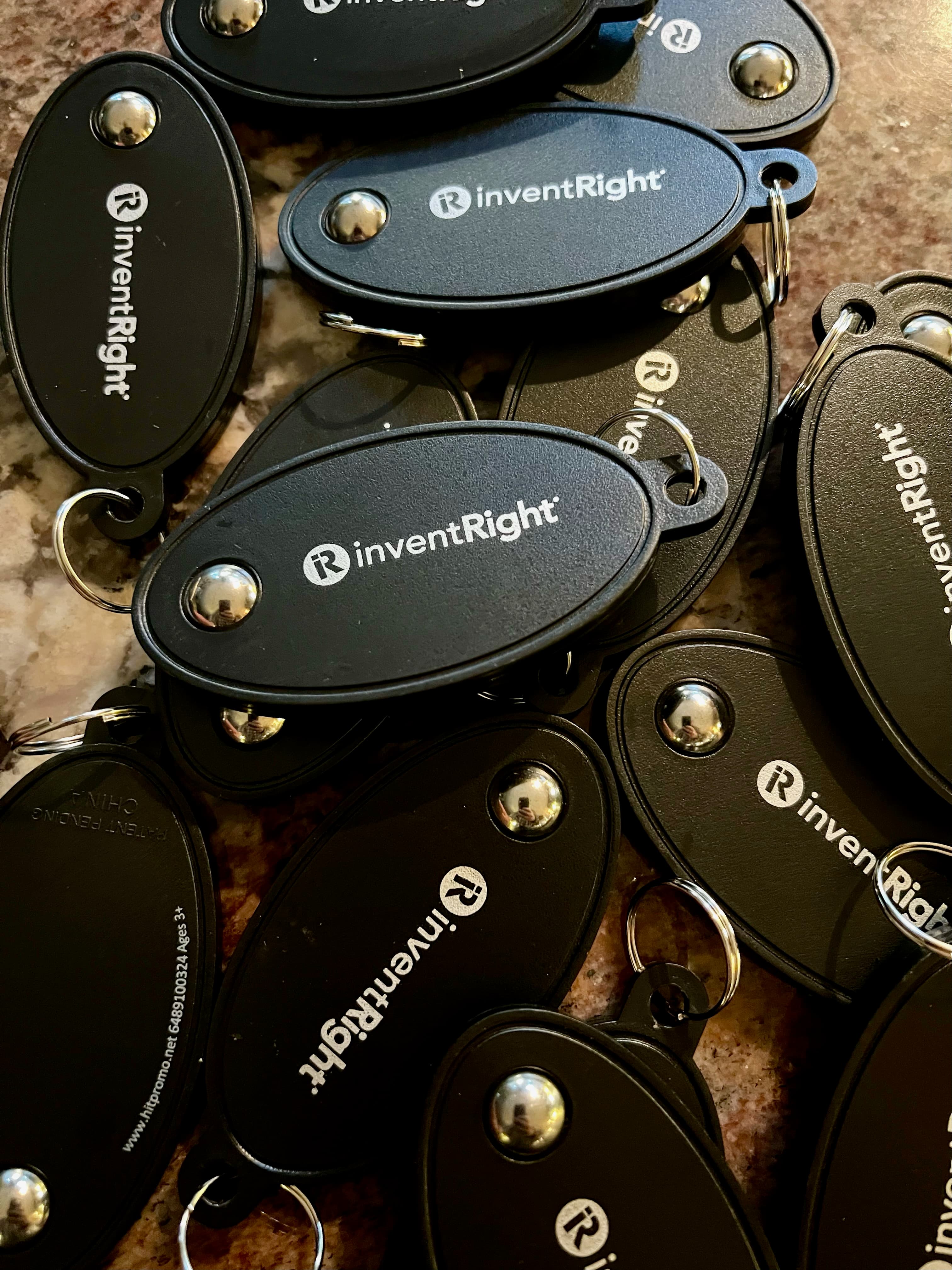
Veronica Rodriguez’s licensed Roll-It Fidget Key Tag sold 50,000 units in one day and has since grown to over 400,000 units sold.
Take the Roller Ball Fidget Keychain, designed and licensed by inventor Veronica Rodriguez after embracing inventRight methods. It's exactly what it sounds like — a keychain with a rollerball built in. No instructions needed. That clarity is part of why it sold over 400,000 units after being licensed to a promotional products company.
2. Small Improvements Beat Reinvention
You don't need to reinvent the wheel when you pitch an idea to a company.
Most successful licensed products are simply better versions of existing ideas. That's not a weakness — it's actually the point. When you sell an idea to a company, the market rewards:
- Faster solutions
- Easier use
- Lower friction
- Better performance
- Improved durability
Incremental improvement is often far more valuable than invention from scratch. Inventor and former inventRight coach April Mitchell's Caterpeeler is a good example: A vegetable peeler is nothing new, but shaping it like a caterpillar made it more fun and more giftable, which was enough to get it licensed by Genuine Fred in the novelty cooking-gadgets space.
That’s not to say small improvements are all companies are looking for. Some companies that embrace open innovation do want to see something completely original. Dana Knowles, an inventRight member who licensed her shower caddy invention to Grand Housewares and now directs inventRight’s Gateway program, explains more about what companies are looking for right now in this video.
3. Large, Proven Markets Matter Most
When you sell an idea to a company, you're not just pitching the product — companies are also evaluating the opportunity.
If your product fits into a large existing market, it immediately becomes more attractive because distribution already exists, customers already exist, and marketing systems already exist. They're not trying to guess demand. They're trying to expand it.
April's Hooked on Hoops landed on Amazon and Wayfair partly because the toy and game category already has enormous built-in retail demand — she didn't need to convince anyone the market existed, only that her product belonged in it.
4. A Clear Point of Difference
"Better" isn't enough. You need to clearly show how it's better.
Ideas that successfully get licensed have a sharp, obvious point of difference compared to what's already on the shelf. Before you pitch an idea to a company, ask yourself:
- What problem does this solve better?
- Why would someone switch from what they already use?
- Can the advantage be shown quickly in a pitch or prototype?
If the difference isn't obvious, it won't sell — no matter how good it is. Veronica's three-piece Joie Prep and Serve Bowl set is a good reminder that the differentiator doesn't have to be complicated. It's a simple, well-designed set of bowls — nothing exotic — and it still found a home with a housewares company because the improvement was immediately visible.
5. Cost Is Critical
In today's market, cost matters more than ever — especially if you want to sell an idea to a company and have it actually reach retail.
If your product can be manufactured at the same cost as existing products, or a lower cost, you dramatically increase your chances of licensing success. Even great ideas get rejected if they can't hit the right price point at retail.
This is part of why April chose to self-publish her first card game rather than license it: Card games require no molds, which keeps production costs low and predictable — the same cost logic that makes a product attractive to a licensee also applies when you manufacture it yourself.
6. Target Companies That Embrace Open Innovation
Not every company is open to outside ideas — and that matters a lot when you're trying to sell an idea to a company.
The best licensing partners actively embrace open innovation; they're already looking beyond their internal teams for new products. These companies typically have submission processes, licensing teams, and experience working with inventors. They're built to evaluate outside ideas efficiently.
April's Clueless party game, co-designed with Wilder Toys and carried by Target, Barnes & Noble, and Walgreens, is a good example of what happens when a product reaches the right kind of partner — one already set up to bring outside ideas to market at scale.
7. Protectability Helps (Even Early On)
You don't need an issued patent to sell an idea to a company, but you do need to show you're taking steps to protect it. This could include a provisional patent application, a design patent filing, or a utility patent application in progress.
What matters is signaling seriousness and protecting the concept enough for meaningful discussions.
April is a three-time patent holder, but she's also clear that IP strategy isn't about filing for everything by default — it's about knowing when protection actually strengthens a specific opportunity.
Veronica took a similar approach: Her licensee covered the cost of her utility patent on a pet product, which is common when a company sees enough value to invest in protecting the deal alongside her.
8. You Are Being Evaluated Too
This is something many inventors underestimate: Companies aren't just evaluating your product, they're evaluating you.
They want to know: Do you understand the licensing process? Are your expectations realistic? Will you be professional and easy to work with?
A strong, informed inventor can elevate an average idea. A difficult or unrealistic one can sink a great idea. April has talked openly about the mental side of this — how easy it is to take a "no" personally early on, and how learning to treat each response as neutral data (rather than a verdict on her worth) is what allowed her to keep pitching consistently enough to land repeat deals.
If you want to keep learning how companies think before you pitch an idea to one, our YouTube channel inventRightTV has hundreds of videos on licensing, pitching, product development, and working with companies.

One Simple Idea on display in the business section of a library.
Additionally, you can explore my book One Simple Idea, where I share more about developing, protecting, and licensing simple product ideas.
Industries That Are Especially Active in Licensing
Some industries consistently welcome outside product ideas, which makes them strong categories if you're trying to sell an idea to a company:
Kitchen products, hardware, tools, toys and games, automotive aftermarket, fitness, wellness, packaging, promotional products, golf, sports equipment, medical products, baby and juvenile, camping and outdoor, gardening, and pet products.
These categories tend to have high product turnover, strong retail distribution, constant demand for improvements, and a history of adopting outside ideas. Between them, Veronica and April have licensed into pet products, toys, games, kitchenware, housewares, tabletop games, and promotional items — a useful reminder that there's no single "right" category to start in.
Frequently Asked Questions
Do I need a patent before I sell an idea to a company?
No. Most companies will discuss an idea under an NDA or with a provisional patent application in place, not a fully issued patent. What matters more is showing you've taken reasonable steps to protect the concept and that you understand the process.
How long does it take to license a product?
It varies widely — some inventors land their first deal within months, others take years of consistent pitching before momentum builds. April Mitchell's first licensed product grew out of years of refining her approach; Veronica has been developing ideas consistently for about eight years and says her momentum picked up significantly in the last two.
How many companies should I pitch?
More than you'd expect. Licensing is a numbers game — most inventors hear "no" or silence far more often than "yes," and the inventors who succeed are typically the ones who keep pitching past the point where it would be easy to quit.
Can I license more than one type of product?
Yes — and many successful inventors do. Veronica alone has licensed products across pet products, toys, games, kitchenware, housewares, tabletop, and promotional items, rather than staying in a single category.
Final Thought
The best ideas to pitch a company are not the most complex — they're the most commercially practical.
If your idea is easy to understand, clearly better, cost-effective, and positioned in a large market, you're already aligned with what companies are actively looking for.
Selling an idea to a company isn't about chasing perfection. It's about finding the space where simple innovation meets real business opportunity — and staying in the process long enough, like Veronica and April have, for that momentum to build.
Do you have ideas to sell to companies? Our team at inventRight Gateway works with inventors to present their products directly to vetted companies. You can learn more here, or reach us at +1 (800) 701-7993 or support@inventright.com.

About the contributor
Stephen KeyStephen Key is an award-winning inventor, renowned intellectual property strategist, lifelong entrepreneur, author, speaker, and columnist. Stephen has over 20 patents in his name and the dozens of concepts he has brought to market have retailed in Walmart, 7-Eleven, and Disney stores and parks worldwide and been endorsed by Michael Jordan, Alex Trebek, and Taylor Swift. He has defended his patents in federal court against the largest toy company in the world, Lego’s. In 1999, he cofounded inventRight to teach others his unique process for harnessing the power of open innovation and the licensing business model. His bestselling book about how to license an idea, One Simple Idea by McGraw-Hill, has been translated into six languages. He has written more than 1,000 articles about intellectual property strategy, product licensing, and entrepreneurship for publications online including Forbes, Inc., and Entrepreneur. Universities and governmental organizations around the world regularly invite him to teach them inventRight’s unique processes for commercializing new product ideas. Stephen has won over 20 industry awards, including two Edison Awards and the Most Influential and Inspiring Leader Of All Time by the WorldIP Forum in 2022. In 2018, he was recognized as a AAAS-Lemelson Invention Ambassador. In 2020, he became a founding member of the United States Intellectual Property Alliance. In 2022, Stephen contributed to “Cases in IP Strategy: Industry Lessons Learned” from the non-profit Michelson Institute for IP. Currently, he’s part of the team responsible for launching a new sustainable packaging innovation that replaces the need to use plastic to carry beverages called Fishbone.
More from Innovate This
We Asked Companies What Products They Want. Here's What They Told Us.
Find out what companies are looking for in new products to license and how inventors can use real company feedback to improve their licensing strategy.
If You’re Thinking About Launching Your Product on Amazon, You Might Be Making an Expensive Mistake
Thinking about launching your product on Amazon? Before investing in inventory, ads, and manufacturing, product developers should understand the hidden costs and risks of selling on Amazon today. For many inventors, product licensing may be a smarter, lower-risk path to bring a product to market.
