Licensing
Licensing a Product? Prepare Yourself for These Questions

Exciting news! You've scored a meeting with a company interested in licensing a product. But hold on tight, because they're going to throw some tough questions your way. Don't sweat it though, I'm here to help you prep so you can ace it.
You've put in the hard work, and now it's time to shine. But let's be honest, meeting with a company can be a little nerve-wracking. They're not just checking out your product, they're also sizing you up, and you want to nail it. They usually ask some pretty standard questions, so let's walk through a few of those because you need to be ready.
Prepare for These Questions When Licensing a Product
Question 1: Do You Have a Patent?
One of the big questions they'll ask is if you have a patent on your idea. Essentially, they're asking if there's a solid reason for them to pay you or not. Now, not every company needs patents, but many prefer it. So, what should you say?
In most cases, you can mention that you have a provisional patent application. If you already have a patent issued, that's fantastic. Just tell them straight up and offer to show it. But if it's just a provisional patent application, here's what you can say:
"Yes, it's in patent pending status. I've filed a provisional patent application, and within the year, I'll be submitting a non-provisional one. I'm confident it'll get approved."
Remember, say it with confidence. They might have doubts because there could be similar ideas out there. But that's okay. You've got your unique selling point. Just address the question upfront and confidently.
Question 2: Do You Have a Prototype?

Another question you might face when licensing a product is whether you have a prototype ready. I like this question because sometimes you do, and sometimes you don't. If you do have a prototype, great. You can showcase it during a meeting or even a virtual call like Zoom. However, I often feel hesitant about sending prototypes because they can break in transit.
Now, if you don't have a prototype yet, that’s okay too. Just be honest and say, "No, I don't have one yet, but I can definitely make one. What kind of prototype are you looking for?" Sometimes a simple prototype, like a Frankenstein version, will show your idea works. Other times, they might want something more advanced.
And in some cases, if they're really interested in your product, they might even offer to help build a prototype for you. So when faced with this question, always remember: honesty is key. Just tell them the truth.
Question 3: Have You Shared Your Idea with Others?
They might also ask if you've shared your idea with anybody else. It's natural to reach out to different companies to gauge interest, but you don't need to give away specific names. If they ask, just let them know that you've shown it to a few companies. If they press for details, politely mention that you're bound by a non-disclosure agreement (NDA), which means you can't reveal the names. This shows respect for confidentiality, which they'll likely appreciate since it assures them that you won't discuss their company without permission.
Question 4: Have You Made Any Sales?

Now, another question you might face is whether you've sold any of your product. It's a valid question, and chances are, you haven't made any sales yet. If that's the case, just be honest and say, "No, I haven't sold any yet. But I'm confident that once people see what I've created, they're going to love it."
What to Do When You Don't Have Answers
Sometimes, you might find yourself stumped by questions during licensing meetings. It's okay; it happens to everyone. When faced with a question you can't answer, don't panic. Just acknowledge it as a great question and let them know you'll need some time to come up with a solid response. Keep it simple and genuine. Remember, it's okay not to have all the answers right then and there.
These licensing interviews are crucial, especially in the early stages. It's important to be a good listener and not to dominate the conversation. Avoid going on and on about how amazing your product is or how you're going to make millions selling it. Instead, focus on being enthusiastic and receptive. You might even want to ask the interviewer what they like about your product idea or how they view the importance of intellectual property. By asking these types of questions, you'll gather valuable insights that can help you later on in the licensing process.
You might also want to ask them, "Can you tell me about your company?" This is where they'll start bragging. They'll tell you about all the places they're selling their stuff. You don't even have to ask because they'll spill it all out. These initial meetings aren't about diving into specifics like minimum guarantees and royalty rates – that can wait. Right now, it's more like a friendly introduction. If they ask about royalty rates, you can simply say, "I'm looking for something fair for both of us." That's it. You don't need to hammer out details during these early meetings because you need to see the whole contract before you can negotiate anything.
These initial meetings can feel intimidating. They’re super important because, as I mentioned earlier, they’re basically interviewing you. So, just be yourself.
Final Thoughts
It's crucial to be adaptable and well-informed when venturing into licensing a product. However, if you're new to this process, it's natural to feel nervous and in need of support. Recently, I had the opportunity to engage with major players like Coca-Cola, McDonald's, and Disney. I often assist our members during such calls because dealing with big companies can be daunting. However, with years of experience under my belt, I've grown comfortable with these interactions. I can lead the conversation and pose the right questions, and my members find it immensely helpful.
If you're feeling overwhelmed and unsure about approaching such companies, don't hesitate to reach out to us at inventRight. We understand the importance of avoiding missteps in these situations.
Additionally, if you're struggling to even secure meetings with these companies, we can assist you. Our new program, Gateway, is designed to take the burden off your shoulders by handling all the groundwork to connect you with the right companies and facilitate licensing agreements discreetly. So, if you need support or guidance in licensing a product, we're here for you every step of the way.

About the contributor
Stephen KeyStephen Key is an award-winning inventor, renowned intellectual property strategist, lifelong entrepreneur, author, speaker, and columnist. Stephen has over 20 patents in his name and the dozens of concepts he has brought to market have retailed in Walmart, 7-Eleven, and Disney stores and parks worldwide and been endorsed by Michael Jordan, Alex Trebek, and Taylor Swift. He has defended his patents in federal court against the largest toy company in the world, Lego’s. In 1999, he cofounded inventRight to teach others his unique process for harnessing the power of open innovation and the licensing business model. His bestselling book about how to license an idea, One Simple Idea by McGraw-Hill, has been translated into six languages. He has written more than 1,000 articles about intellectual property strategy, product licensing, and entrepreneurship for publications online including Forbes, Inc., and Entrepreneur. Universities and governmental organizations around the world regularly invite him to teach them inventRight’s unique processes for commercializing new product ideas. Stephen has won over 20 industry awards, including two Edison Awards and the Most Influential and Inspiring Leader Of All Time by the WorldIP Forum in 2022. In 2018, he was recognized as a AAAS-Lemelson Invention Ambassador. In 2020, he became a founding member of the United States Intellectual Property Alliance. In 2022, Stephen contributed to “Cases in IP Strategy: Industry Lessons Learned” from the non-profit Michelson Institute for IP. Currently, he’s part of the team responsible for launching a new sustainable packaging innovation that replaces the need to use plastic to carry beverages called Fishbone.
More from Innovate This
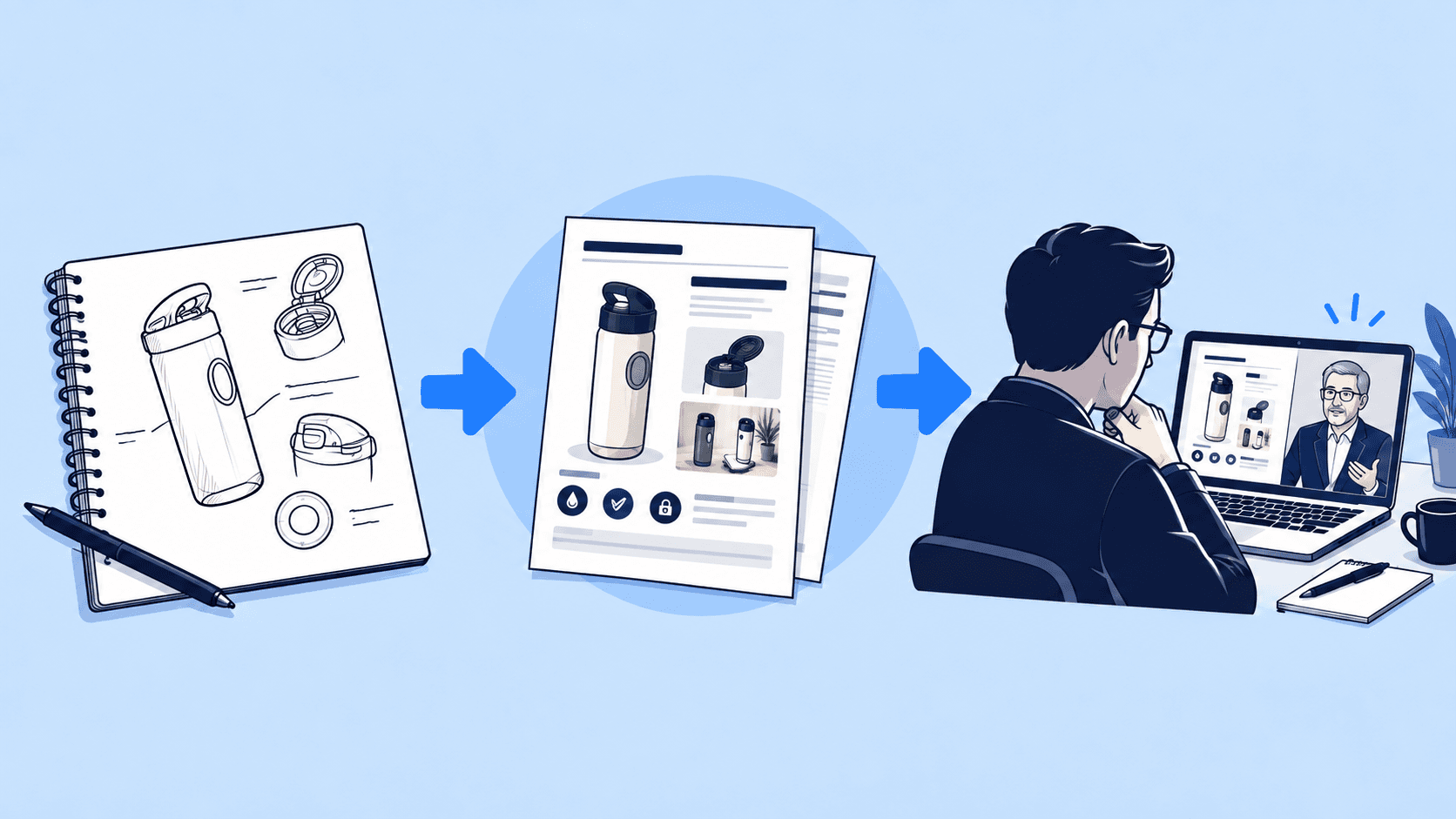
How to Create a Sell Sheet That Gets Companies Interested in Your Product
Learn how to create a product sell sheet for licensing that gets companies interested. Discover what to include, what to leave out, and how strong positioning can help your product stand out.
8 Things Companies Look for Before Licensing a Product
Want to sell an idea to a company? Learn what makes a product license-ready — from a licensing expert who's done it since his 20s.
